Curcumin vs Turmeric Powder: Key Differences for Supplement Formulators and Manufacturers
🧠 1. Introduction
Curcumin and turmeric powder are often used interchangeably in consumer discussions, but in the nutraceutical industry, they are completely different functional materials.
For supplement formulators, understanding this difference is critical for:
- Product efficacy
- Bioavailability performance
- Regulatory compliance
- Final formulation stability
🌿 2.What Is Turmeric Powder?
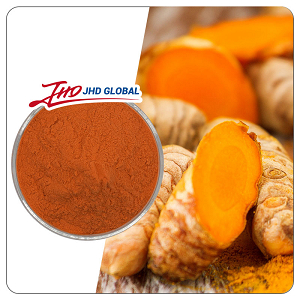
Turmeric powder is a raw botanical spice obtained by drying and grinding the root of Curcuma longa.
Key characteristics:
- Natural whole herb powder
- Contains only 2–5% curcuminoids
- Variable composition depending on harvest
- Used mainly in food seasoning and traditional applications
👉 In supplement manufacturing, turmeric powder is considered a low-potency raw material.
🧪3. What Is Curcumin Extract?
Curcumin extract is a highly concentrated and standardized active compound extracted from turmeric.
Key characteristics:
- Standardized to 95% curcuminoids
- Highly purified active ingredient
- Suitable for precise formulation
- Used in dietary supplements and nutraceuticals
👉 It is the functional version of turmeric used in modern supplements.
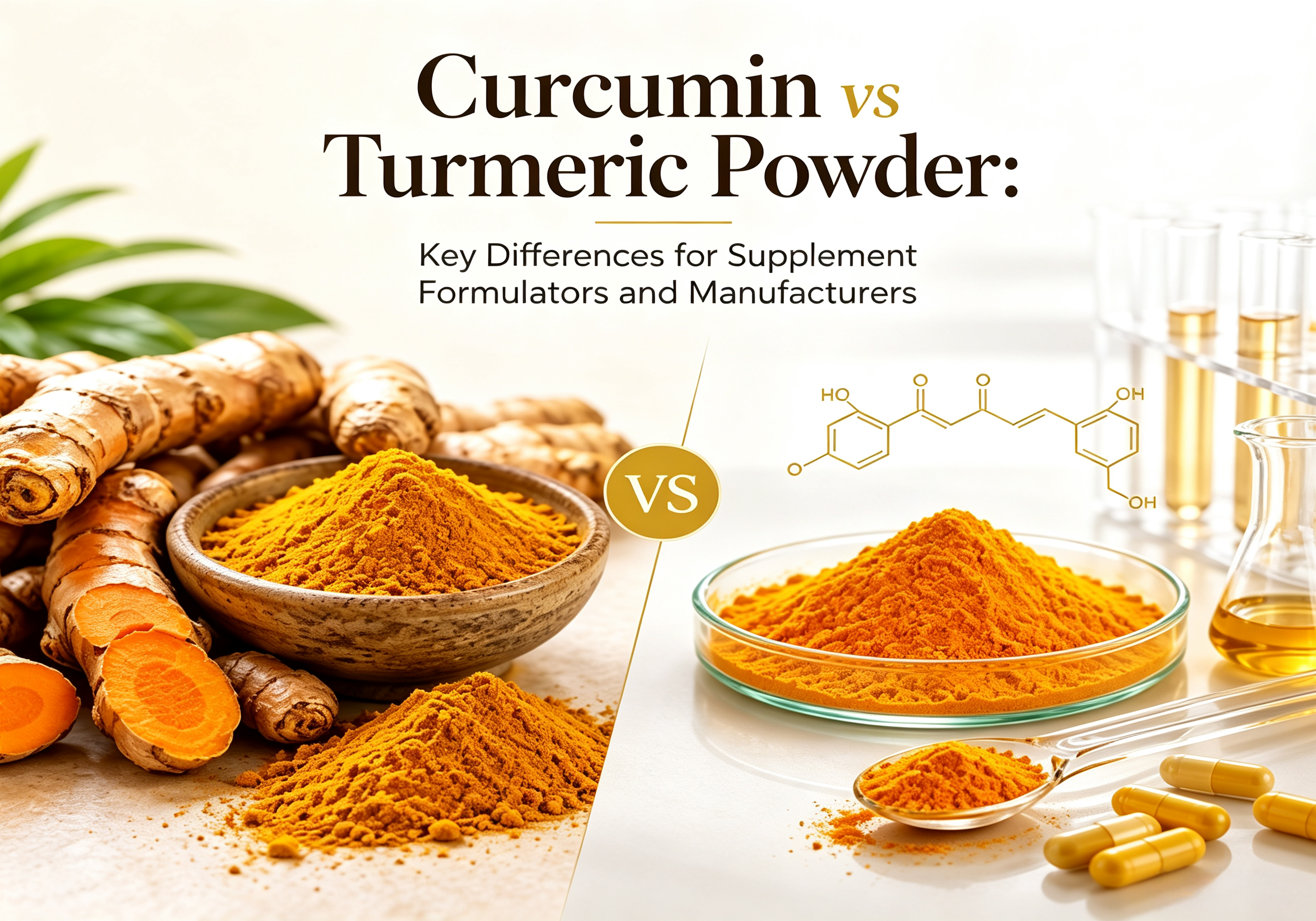
⚖️4. Curcumin vs Turmeric Powder (Core Comparison)
🧬 4.1 Active Content
- Turmeric Powder: 2–5% curcuminoids
- Curcumin Extract: up to 95% curcuminoids
👉 Curcumin extract is ~20–40x more concentrated.
💊 4.2 Bioavailability
Turmeric powder:
- Low absorption rate
- Requires large dosage
Curcumin extract:
- Higher bioactive availability
- Suitable for encapsulation & formulation optimization
🏭 4.3 Industrial Application
Turmeric Powder:
- Food seasoning
- Traditional herbal use
- Low-cost applications
Curcumin Extract:
- Dietary supplements
- Functional foods
- Anti-inflammatory formulations
- OEM nutraceutical products
📦 4.4 Formulation Precision
- Turmeric powder → inconsistent dosing
- Curcumin extract → standardized dosing
👉 This is why supplement manufacturers almost always choose curcumin extract.
🧪 5. Why Supplement Formulators Prefer Curcumin Extract
Modern nutraceutical brands prefer curcumin extract because:
- Consistent batch quality
- Higher efficacy at lower dosage
- Easier to formulate into capsules/tablets
- Meets regulatory requirements
- Better clinical validation potential
👉 It is the industry standard active ingredient.
🏭 6. Manufacturing Considerations
When choosing curcumin raw materials, manufacturers consider:
Key factors:
- Standardization level (typically 95%)
- Heavy metal & microbial compliance
- COA documentation
- Stability in formulation
- Solubility performance
🌍 7. Market Usage Trends
Curcumin extract demand is growing because:
- Rising anti-inflammatory supplement market
- Expansion of joint health products
- Increased demand for natural alternatives
- Growth of functional beverages
👉 Turmeric powder remains food-grade, while curcumin dominates the supplement-grade market.
🔗 8. Related Ingredients (Internal Linking Section)
To build strong formulation systems, curcumin is often combined with:
🦴 Joint Health:
- Boswellia Serrata Extract
- Collagen Peptides
🧠 Antioxidant Support:
- Resveratrol
- Quercetin
- EGCG Green Tea Extract
💪 Immune Support:
- Vitamin C
- Zinc
📦 9. Bulk Supply Information
We supply standardized curcumin extract for global supplement manufacturers.
Available specification:
- Curcumin 95% (Standardized Curcuminoids)
Services:
- COA & technical documentation
- OEM formulation support
- Global warehouse shipping
- Sample testing support
📩 CTA
👉 Contact us for bulk pricing, sample requests, and formulation consultation.
Related Articles: Curcumin vs Turmeric Powder: Key Differences for Supplement Formulators and Manufacturers
Harnessing the Power of Bulk Ginger and Turmeric for Next-Gen Formulations
Why 95% Curcuminoids Is the Industry Standard in Curcumin Extract Manufacturing