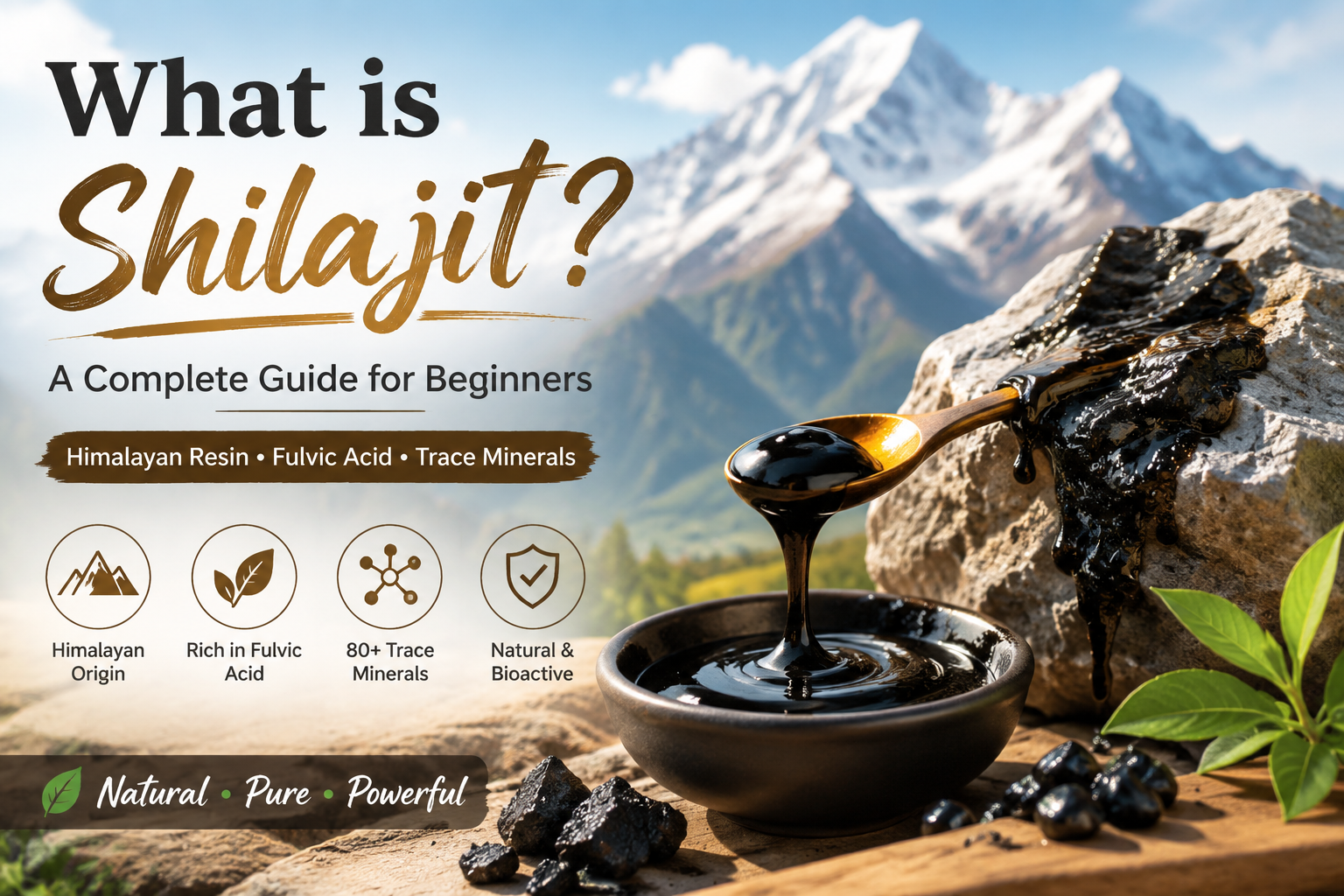
What is Shilajit? A Complete Guide to Himalayan Shilajit Resin, Composition, and Benefits
What Is Shilajit?
Shilajit is a natural herbo-mineral exudate found primarily in mountain ranges such as the Himalayas, Altai, and Caucasus.
It is not a plant extract or a synthetic compound. Instead, it is a complex natural matrix composed of organic matter and minerals, formed through long-term biological and geological processes.
Related search terms
- shilajit resin meaning
- what is Himalayan shilajit
- mineral pitch substance
- fulvic acid natural source
From a scientific perspective, shilajit is considered a phytocomplex mineral biomass, containing bioactive organic compounds and trace elements.
How Shilajit Is Formed (Natural Formation Process)
The formation of shilajit is a slow geological process that can take hundreds to thousands of years.
Step-by-step formation:
1. Ancient plant accumulation
Organic plant material accumulates in high-altitude ecosystems.
2. Microbial decomposition
Microorganisms break down biomass over time.
3. Geological compression
Heat and pressure from mountain formation compress organic matter.
4. Bio-transformation
Organic compounds transform into a stable resin-like substance.
5. Natural exudation
Shilajit slowly seeps out from rock formations during warm seasons.
Chemical Composition of Shilajit (Fulvic Acid + Minerals)
The composition of shilajit varies depending on origin and purification methods, but it typically contains the following key components:
1. Fulvic Acid (Key Active Compound)
Fulvic acid is the most studied component in shilajit.
It is associated with:
- Mineral transport in biological systems
- Nutrient bioavailability support
- Natural antioxidant activity
2. Humic Substances
Humic acids and humins are formed during long-term decomposition of organic matter, contributing to shilajit’s structural complexity.
3. Trace Minerals (80+ Elements)
Shilajit naturally contains trace minerals such as:
- Iron
- Magnesium
- Zinc
- Potassium
- Calcium
These minerals make shilajit a natural mineral supplement base ingredient.
4. Bioactive Organic Compounds
Including dibenzopyrones and other naturally occurring molecules that are being studied for cellular energy pathways.
Shilajit Resin vs Shilajit Extract Powder
Understanding different commercial forms is important for both consumers and supplement manufacturers.
1. Shilajit Resin (Raw Form)
- Most natural form
- Sticky tar-like texture
- Minimal processing
- Considered high-potency raw material
2. Shilajit Extract Powder
- Spray-dried or freeze-dried
- Easy for capsule/tablet manufacturing
- Better stability for industrial production
3. Standardized Shilajit Extract
- Controlled fulvic acid content
- Used in branded supplement formulations
- Preferred for consistency in OEM manufacturing
Shilajit vs Fulvic Acid
Shilajit and fulvic acid are closely related but not identical.
- Shilajit = natural complex matrix (fulvic acid + minerals + organic matter)
- Fulvic acid = isolated purified compound
This distinction is important in supplement formulation because shilajit provides a broader spectrum of naturally occurring compounds, while fulvic acid is a single active ingredient.
Applications in Dietary Supplements
In the nutraceutical industry, shilajit is widely used as a functional ingredient and bioavailability enhancer.
Common applications:
- Energy and vitality supplement formulas
- Men’s health supplement blends
- Adaptogen formulations
- Herbal combination products (e.g., with ashwagandha, ginseng)
- Mineral support supplements
For manufacturers, shilajit is often used as a supporting ingredient to enhance formula performance and absorption efficiency.
Quality Standards for Shilajit Raw Material
When sourcing shilajit for supplement manufacturing, quality control is critical.
High-quality shilajit should meet the following standards:
1. Heavy Metal Testing
- Lead, arsenic, mercury control required
2. Purification Process
- Proper filtration and purification to remove contaminants
3. Fulvic Acid Standardization
- Consistent active compound content
4. Traceability
- Clear geographic origin (e.g., Himalayas, Altai)
5. Third-Party Lab Testing
- COA (Certificate of Analysis) available
Frequently Asked Questions (FAQ)
Is shilajit natural or synthetic?
Shilajit is a fully natural substance formed through long-term decomposition of plant material and geological processes.
What is shilajit resin used for?
Shilajit resin is commonly used in dietary supplement manufacturing for energy, vitality, and mineral support formulations.
Is shilajit safe for daily use?
Purified and lab-tested shilajit is generally considered safe when used according to recommended dosage.
What is the difference between shilajit and fulvic acid?
Shilajit is a natural complex substance, while fulvic acid is one of its key isolated components.
Conclusion
Shilajit is a rare natural mineral resin composed of fulvic acid, trace minerals, and organic compounds formed over centuries in high-altitude environments.
Due to its unique composition and bioactive properties, shilajit has become an important raw material in the global nutraceutical and dietary supplement industry.
As demand for natural mineral-based ingredients continues to grow, shilajit remains a high-value functional ingredient for supplement manufacturers and health brands worldwide.