Mushroom Coffee Benefits: A B2B Guide to Ingredients, Formulation & Sourcing
Mushroom coffee combines conventional coffee with functional mushroom powders or extracts to create a differentiated beverage ingredient blend. Common mushroom ingredients include Lion's Mane, Reishi, Chaga, Cordyceps, and Turkey Tail.
For food and beverage manufacturers, developing mushroom coffee involves more than selecting popular mushroom ingredients. Extract specifications, active compound content, solubility, flavor compatibility, caffeine levels, and processing requirements all influence the final product.
This guide explores commonly used functional mushrooms, their key compounds, commercial applications, and important sourcing considerations for mushroom coffee manufacturers.
1. What Is Mushroom Coffee?
Mushroom coffee is a functional beverage made by combining coffee with mushroom powders or extracts.
Unlike traditional coffee, which primarily provides caffeine from coffee beans, mushroom coffee formulations incorporate additional botanical and fungal ingredients to create different product concepts and nutritional profiles.
Common commercial formats include:
-
Instant mushroom coffee powder
-
Ground coffee blended with mushroom extracts
-
Mushroom coffee sachets and stick packs
-
Functional mushroom latte mixes
-
Ready-to-drink (RTD) mushroom coffee beverages
The mushroom ingredients may be supplied as raw powders or standardized extracts, depending on the formulation and manufacturing requirements.
An important distinction for product developers is that research on individual mushroom extracts does not automatically establish the benefits of a finished mushroom coffee blend. Human clinical research specifically examining mushroom coffee remains limited.
For further background, see Harvard Health's overview of mushroom coffee.
2. Common Functional Mushrooms Used in Mushroom Coffee
Different mushrooms contain different naturally occurring compounds. Selecting the right ingredients depends on the intended formulation, target market, and desired product characteristics.
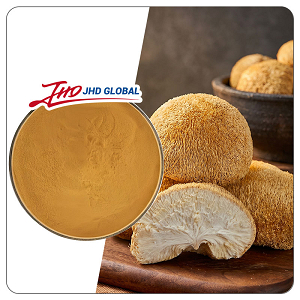
Lion's Mane Mushroom (Hericium erinaceus)
Lion's Mane is a popular functional mushroom used in dietary supplements and functional beverage formulations.
Its key naturally occurring constituents include:
-
Beta-Glucans: Important polysaccharides and key quality markers for commercial Lion's Mane extracts.
-
Other Polysaccharides: Contribute to the mushroom's overall carbohydrate composition.
-
Hericenones and Erinacines: Naturally occurring compounds that have attracted scientific research interest.
For commercial ingredient sourcing, beta-glucan content is an important specification to evaluate. Buyers should also consider the source material, extraction process, and analytical method when comparing different Lion's Mane extracts.
Formulation considerations: Lion's Mane extract can be incorporated into instant mushroom coffee, functional beverage powders, capsules, tablets, and multi-mushroom formulations.
Reishi Mushroom (Ganoderma lucidum)
Reishi is traditionally used in East Asian herbal preparations and is widely incorporated into functional mushroom products.
Its major compound groups include:
-
Polysaccharides
-
Beta-glucans
-
Triterpenes, including ganoderic acids
Reishi's naturally bitter flavor is an important consideration when developing coffee blends. Manufacturers may need to balance its flavor profile with coffee, cocoa, natural sweeteners, or other ingredients.
Formulation considerations: The desired compound profile should guide the selection of water extraction, alcohol extraction, or dual extraction.
Chaga Mushroom (Inonotus obliquus)
Chaga is a mushroom ingredient commonly used in functional beverage formulations.
Its reported chemical constituents include:
-
Polysaccharides
-
Polyphenolic compounds
-
Melanin-related compounds
-
Other naturally occurring antioxidants
Chaga has been widely studied for its chemical composition and antioxidant activity, although much of the research is preclinical.
Formulation considerations: Buyers should pay attention to raw material identity, geographical origin, heavy metals, and oxalate levels where relevant. High oxalate exposure has been associated with kidney injury in published case reports involving excessive Chaga consumption.
Cordyceps (Cordyceps militaris)
Cordyceps is frequently included in sports nutrition and functional beverage concepts.
Depending on the species and material, important compounds may include:
-
Cordycepin
-
Polysaccharides
Cordyceps militaris and Cordyceps sinensis are different materials and should not be treated as interchangeable. Their chemical profiles and commercial specifications can differ.
Formulation considerations: Confirm the botanical or fungal identity, cultivation method, target marker compounds, and analytical method before selecting a Cordyceps ingredient.
Turkey Tail Mushroom (Trametes versicolor)
Turkey Tail is known for its naturally occurring polysaccharides and beta-glucans.
Its studied constituents include:
-
Beta-glucans
-
Polysaccharide
Formulation considerations: Turkey Tail can be considered for multi-mushroom beverage blends. Buyers should confirm the actual polysaccharide or beta-glucan specification rather than relying on the mushroom name alone.
Functional Mushroom Comparison for B2B Buyers
| Mushroom | Key Compounds | Important Sourcing Consideration |
|---|---|---|
| Lion's Mane | Beta-glucans, Polysaccharides | Fruiting body vs. mycelium |
| Reishi | Beta-glucans, triterpenes | Extraction method and triterpene content |
| Chaga | Polysaccharides, polyphenols | Origin, heavy metals, oxalates |
| Cordyceps | Cordycepin, polysaccharides | Species identity and marker content |
| Turkey Tail | Beta-glucans, polysaccharides | Analytical method and actual beta-glucan content |
3. What Are the Potential Benefits of Mushroom Coffee?
The ingredients used in mushroom coffee have attracted scientific and commercial interest. However, it is important to distinguish between research on individual mushroom ingredients and evidence for finished mushroom coffee products.
Caffeine and Energy
Coffee provides caffeine, which contributes to alertness and short-term energy.
Mushroom extracts do not automatically reduce caffeine-related effects. The caffeine content of the finished beverage depends primarily on the amount and type of coffee used.
For manufacturers developing lower-caffeine products, the coffee-to-mushroom ratio and the choice of coffee ingredients should be carefully evaluated.
Cognitive Function Research
Lion's Mane has received attention in research investigating cognitive function and neurological pathways.
Some small human studies have reported changes in selected cognitive measures, but the evidence is still developing.
A 2025 systematic review of Lion's Mane research highlighted the limited number of clinical trials and differences in the preparations used.
Reference: Lion's Mane Supplementation – Systematic Review.
Beta-Glucans and Mushroom Composition
Beta-glucans are naturally occurring polysaccharides found in various mushrooms.
They are widely studied for their biological activities and are important chemical constituents in many functional mushroom ingredients.
For manufacturers, beta-glucan content is also an important quality parameter when selecting certain mushroom extracts.
However, total polysaccharide content and beta-glucan content are not interchangeable measurements. The analytical method and reported parameter should always be confirmed.
Antioxidant-Related Research
Various mushroom species contain naturally occurring compounds that demonstrate antioxidant activity in laboratory studies.
These compounds include certain polyphenols and other fungal constituents.
However, laboratory antioxidant measurements do not establish the same effects in humans or prove that a finished mushroom coffee product provides specific health benefits.
For B2B manufacturers: Ingredient-level research can help inform product development, but finished-product claims must be supported by appropriate scientific evidence and comply with the regulations of the intended market.
4. Mushroom Coffee Applications and Formulation Opportunities
Functional mushroom extracts can be incorporated into several commercial beverage formats.
The appropriate ingredient grade depends on the production process, finished product characteristics, and target market.
Instant Mushroom Coffee Powder
Instant mushroom coffee is one of the most convenient formats for commercial beverage development.
Manufacturers can combine instant coffee with selected mushroom extracts to produce ready-to-mix powder blends.
Important considerations include:
-
Water solubility
-
Dispersibility
-
Powder flowability
-
Moisture content
-
Flavor compatibility
-
Ingredient uniformity
Mushroom Coffee Sachets and Stick Packs
Single-serve sachets and stick packs are suitable for convenient beverage products.
These formats allow manufacturers to develop different combinations of coffee, mushroom extracts, sweeteners, and additional functional ingredients.
Powder particle size, filling characteristics, and moisture control should be considered during production.
Mushroom Latte and Functional Coffee Blends
Mushroom extracts can also be incorporated into latte-style beverage powders.
Common formulation ingredients include:
-
Instant coffee
-
Lion's Mane Extract
-
Reishi Extract
-
Cordyceps Extract
-
Coconut Milk Powder
-
Cocoa Powder
-
Natural Sweeteners
-
MCT Powder
The final blend should be evaluated for taste, solubility, texture, and ingredient compatibility.
Ready-to-Drink (RTD) Mushroom Coffee
RTD mushroom coffee offers another product development opportunity for beverage manufacturers.
For liquid formulations, ingredient selection should consider:
-
Water solubility
-
Dispersion and sedimentation
-
pH compatibility
-
Heat-processing stability
-
Color and flavor changes
-
Shelf-life requirements
Not every mushroom powder is suitable for direct use in an RTD beverage. Water-soluble extracts may be more appropriate depending on the production process.
5. Fruiting Body vs. Mycelium: What Should Buyers Choose?
One of the most important sourcing considerations in the functional mushroom industry is the difference between fruiting body and mycelium materials.
Fruiting Body
The fruiting body is the visible reproductive structure of a mushroom.
Commercial fruiting body extracts are produced from harvested mushroom structures and may be standardized according to selected compounds such as beta-glucans or polysaccharides.
Mycelium
Mycelium is the network of fungal filaments responsible for growth and nutrient absorption.
Commercial mycelium ingredients may be produced through controlled fermentation or solid-state cultivation.
The cultivation substrate is important. For example, grain-grown mycelium products may contain residual starch and grain material, which can influence the final composition and analytical results.
Comparison for B2B Buyers
| Factor | Fruiting Body | Mycelium |
|---|---|---|
| Source Material | Mushroom reproductive structure | Fungal vegetative biomass |
| Production | Cultivation and harvesting | Fermentation or controlled cultivation |
| Chemical Profile | Depends on mushroom species | Depends on strain and cultivation conditions |
| Quality Evaluation | Identity and marker content | Identity, substrate, and marker content |
| Main Consideration | Species and fruiting body purity | Substrate and residual grain content |
Neither form should automatically be considered superior in every application.
The appropriate choice depends on the target compounds, research requirements, product specifications, and manufacturing objectives.
Buyers should request clear information about the source material and cultivation substrate before purchasing.
6. How to Evaluate Mushroom Extract Specifications
For commercial mushroom coffee production, choosing the right extract requires more than comparing extract ratios.
1. Confirm the Mushroom Species
Verify the scientific name of the mushroom used.
Different species can have different chemical compositions, so common names alone are not sufficient for raw material identification.
2. Check Fruiting Body or Mycelium
Confirm the part of the fungus used in production.
For mycelium products, ask about the cultivation substrate and whether residual grain material is present.
3. Understand Polysaccharides vs. Beta-Glucans
These two parameters are frequently confused in the functional mushroom market.
Total Polysaccharides
This refers to a broader group of carbohydrate compounds measured according to a specified analytical procedure.
Beta-Glucans
Beta-glucans are a particular group of glucose polymers with specific structural linkages.
A product with 30% polysaccharides does not necessarily contain 30% beta-glucans.
For buyers seeking a defined beta-glucan specification, the COA should clearly identify the analytical method used.
4. Evaluate the Extraction Method
Different extraction methods are suitable for different target compounds.
-
Hot Water Extraction: Commonly used to obtain water-soluble polysaccharides and related constituents.
-
Alcohol Extraction: Used when targeting certain alcohol-soluble compounds, including triterpenes in Reishi.
-
Dual Extraction: Combines water and alcohol extraction approaches when both water-soluble and alcohol-soluble compound groups are desired.
Dual extraction is not automatically necessary for every mushroom. The appropriate process depends on the species and intended chemical profile.
5. Review the Extract Ratio
Commercial mushroom extracts may be described using ratios such as 4:1, 8:1, or 10:1.
However, the extract ratio alone does not establish the actual concentration of beta-glucans or other marker compounds.
Buyers should review the extraction process, native extract ratio, carriers, and analytical results together.
6. Review Quality Documentation
A suitable product specification and batch-specific COA should provide relevant information, including:
-
Botanical or fungal identity
-
Source material
-
Active constituent content
-
Analytical methods
-
Heavy metal results
-
Microbiological results
-
Residual solvent testing, where applicable
-
Pesticide or other contaminant testing, where required
For mushroom ingredients, analytical transparency is particularly important because different testing methods can produce different reported results.
A 2026 study published in the Journal of AOAC INTERNATIONAL discusses analytical challenges in beta-glucan measurement, including interference from starch-rich mycelium substrates.
Reference: Advances in Enzymatic Measurement of Beta-Glucan.
7. How to Choose the Right Mushroom Extract for Coffee Formulation
Before purchasing mushroom extracts, manufacturers should define the requirements of their finished beverage.
| Product Requirement | What Buyers Should Evaluate |
|---|---|
| Instant Coffee | Water solubility and dispersibility |
| Coffee Sachets | Flowability, moisture, and filling performance |
| Mushroom Latte | Taste, texture, color, and blend compatibility |
| RTD Coffee | Solubility, sedimentation, pH, and heat stability |
| Standardized Mushroom Blend | Marker content and analytical methods |
| Premium Functional Coffee | Source material, traceability, and quality documentation |
Questions to Ask Your Mushroom Extract Supplier
Before confirming an order, buyers should ask:
-
What is the exact mushroom species?
-
Is the material sourced from fruiting bodies or mycelium?
-
What extraction method is used?
-
What are the available polysaccharide and beta-glucan specifications?
-
Is the extract water-soluble?
-
Are carriers or processing aids used?
-
Can you provide a batch-specific COA?
-
What packaging and bulk supply options are available?
These questions help manufacturers select ingredients that are suitable for their formulation and production requirements.
8. Frequently Asked Questions About Mushroom Coffee
What mushrooms are commonly used in mushroom coffee?
Common ingredients include Lion's Mane, Reishi, Chaga, Cordyceps, and Turkey Tail. The selection depends on the formulation concept, target market, and desired ingredient specifications.
Does mushroom coffee contain caffeine?
It depends on the formulation. Mushroom coffee containing regular coffee or instant coffee generally contains caffeine. Caffeine-free versions can be developed using decaffeinated coffee or coffee alternatives.
What is the difference between mushroom powder and mushroom extract?
Mushroom powder is generally produced by drying and grinding mushroom material. Mushroom extract undergoes an extraction and concentration process to obtain selected constituents. Their chemical composition and functional properties can differ.
Is fruiting body extract better than mycelium extract?
Not necessarily. Both can be used in commercial mushroom ingredients. Buyers should evaluate the mushroom species, source material, cultivation substrate, marker content, and analytical results.
What is the difference between polysaccharides and beta-glucans?
Beta-glucans are a specific group of polysaccharides. Total polysaccharide content measures a broader group of carbohydrate compounds and should not be treated as equivalent to beta-glucan content.
Is dual extraction necessary for mushroom coffee?
No. Dual extraction is useful when the formulation requires both water-soluble polysaccharides and alcohol-soluble compounds, such as certain Reishi triterpenes. The extraction process should be selected according to the target mushroom and desired constituents.
What information should buyers request when sourcing mushroom extracts?
Buyers should request the scientific name, source material, extraction method, extract ratio, active constituent specifications, COA, and relevant contaminant testing documentation.
Source Functional Mushroom Extracts from JHD GLOBAL
Developing a commercial mushroom coffee product requires suitable raw materials, consistent specifications, and reliable ingredient supply.
ingredientssupply (JHD GLOBAL) supports B2B buyers with a range of functional mushroom ingredients for dietary supplements and food and beverage applications.
Our team brings more than 20 years of manufacturing experience and over 10 years of export experience, supporting international ingredient sourcing requirements.
Whether you are developing instant mushroom coffee, functional latte powders, or multi-mushroom beverage blends, we can help you review suitable ingredient specifications.
For sourcing inquiries, please share:
-
Required mushroom species
-
Fruiting body or mycelium preference
-
Target polysaccharide or beta-glucan content
-
Preferred extraction method
-
Estimated order quantity
-
Destination country
-
Technical documentation requirements
Our team can help review available specifications and confirm current stock and supply arrangements.
Contact JHD GLOBAL to discuss your functional mushroom ingredient requirements.