NMN and Aging: How It Affects Cellular Longevity
What Is NMN and Why Is It Related to Aging?
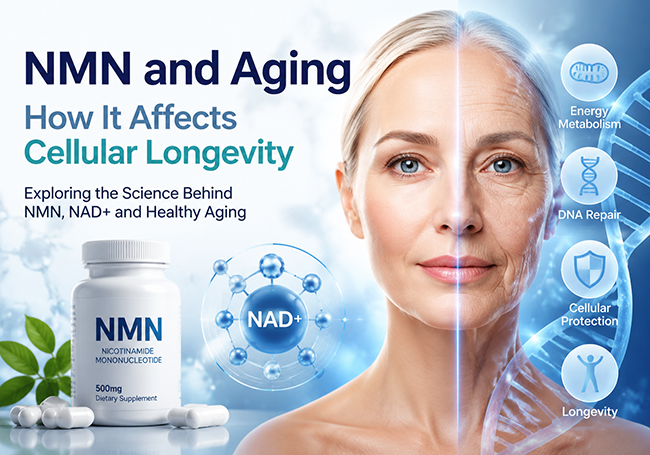
NMN, short for nicotinamide mononucleotide, is a naturally occurring molecule found in small amounts in foods such as vegetables, fruits, and certain animal products. Within the body, NMN acts as an intermediate compound in the production of NAD+, an essential molecule required for hundreds of cellular reactions.
NAD+ plays several critical roles, including:
- Supporting mitochondrial energy production
- Activating longevity-associated enzymes
- Maintaining DNA repair mechanisms
- Regulating cellular stress responses
- Supporting healthy metabolism
However, NAD+ levels naturally decline with age. Research suggests that reduced NAD+ availability may contribute to age-related changes in cellular function.
Because NMN can help replenish NAD+ levels, researchers have investigated whether NMN supplementation could support healthier aging processes.
The Connection Between NAD+ Decline and Aging
One of the major biological changes associated with aging is the gradual reduction of NAD+ levels.
NAD+ is required for mitochondrial function, and mitochondria are often described as the “powerhouses” of cells because they generate energy in the form of ATP.
As NAD+ levels decrease:
- Mitochondrial energy production may become less efficient
- Cellular repair processes may slow down
- Oxidative stress may increase
- Metabolic function may become impaired
Scientists believe that restoring NAD+ levels could help maintain cellular performance and support mechanisms involved in healthy aging.
NMN supplementation is one approach being studied to increase NAD+ availability.
How NMN May Support Cellular Longevity
1. NMN Supports NAD+ Production
The primary mechanism behind NMN and aging research is its ability to increase NAD+ levels.
After NMN enters cells, it can be converted into NAD+ through the NAD+ salvage pathway. This pathway is essential for maintaining NAD+ availability throughout life.
Higher NAD+ levels may help cells maintain normal biological functions, particularly in tissues with high energy demands, such as:
- Muscles
- Brain
- Heart
- Liver
By supporting NAD+ metabolism, NMN may contribute to improved cellular resilience during the aging process.
2. NMN Activates Sirtuins: The Longevity-Related Proteins
One of the most studied connections between NAD+ and aging involves sirtuins, a family of proteins associated with cellular regulation and longevity.
Sirtuins require NAD+ to function properly. These enzymes influence several important biological processes, including:
- DNA repair
- Mitochondrial function
- Inflammation regulation
- Cellular stress resistance
When NAD+ levels decline with age, sirtuin activity may also decrease.
By increasing NAD+ availability, NMN may help support sirtuin activity and promote healthier cellular responses.
A landmark study published in Nature demonstrated the important relationship between NAD+-dependent enzymes and aging-related cellular pathways, highlighting the potential role of NAD+ metabolism in longevity research.
3. NMN and Mitochondrial Function
Mitochondrial decline is considered one of the key characteristics of aging.
Healthy mitochondria are essential for:
- Producing cellular energy
- Maintaining metabolic balance
- Supporting tissue function
Aging-related NAD+ decline can negatively affect mitochondrial activity because NAD+ is required for efficient energy production.
Research suggests that restoring NAD+ levels through NMN supplementation may help maintain mitochondrial function by supporting:
- Energy metabolism
- Mitochondrial biogenesis
- Cellular efficiency
This is one reason NMN has become popular among researchers studying longevity and healthy aging.
4. NMN and DNA Repair Mechanisms
Every day, cells experience DNA damage caused by normal metabolism, environmental stress, and aging.
The body relies on repair enzymes, including PARPs (poly ADP-ribose polymerases), to maintain DNA integrity. These enzymes consume NAD+ during the repair process.
When NAD+ levels decline:
- DNA repair efficiency may decrease
- Cellular damage may accumulate over time
By supporting NAD+ availability, NMN may help maintain cellular repair capacity and protect against age-related decline.
Scientific Research on NMN and Aging
Animal studies have provided promising evidence regarding NMN and healthy aging.
Research in mice has shown that NMN supplementation may:
- Increase NAD+ levels
- Improve mitochondrial function
- Support muscle performance
- Enhance metabolic health
Human clinical studies are still developing, but early research indicates that NMN supplementation can increase NAD+ levels in humans and is generally well tolerated in studied populations.
However, scientists emphasize that NMN is not a “reverse aging” treatment. Aging involves many interconnected biological pathways, and more long-term human studies are needed to fully understand NMN’s effects.
Is NMN an Anti-Aging Supplement?
The term anti-aging NMN is often used in marketing, but scientifically, NMN should be viewed as a compound that supports cellular processes associated with aging rather than a guaranteed anti-aging solution.
Current evidence suggests NMN may support:
✔ NAD+ restoration
✔ Cellular energy metabolism
✔ Mitochondrial health
✔ DNA maintenance pathways
✔ Healthy aging processes
However, NMN does not replace fundamental lifestyle factors such as:
- Balanced nutrition
- Regular exercise
- Quality sleep
- Stress management
Longevity is influenced by many factors, and NMN is only one part of a broader healthy aging strategy.
NMN Dosage and Longevity Supplement Considerations
The optimal NMN dosage for longevity benefits is still being researched.
Human studies have explored different dosage ranges, commonly including:
- 250 mg per day
- 500 mg per day
- Higher doses under clinical investigation
Factors that may influence NMN supplementation decisions include:
- Age
- Lifestyle
- Health status
- Individual goals
Consumers should choose high-quality NMN products with proper testing and transparent manufacturing standards.
NMN and Aging: What Does the Future Hold?
Research into NMN and longevity represents one of the most exciting areas in modern aging science.
By increasing NAD+ levels, NMN may influence several biological pathways associated with aging, including:
- Sirtuin activation
- Mitochondrial function
- DNA repair
- Cellular stress response
Although current research is promising, NMN should be considered a developing area of science rather than a proven anti-aging therapy.
Future long-term human studies will help determine how NMN supplementation may contribute to healthy aging and lifespan-related outcomes.
Frequently Asked Questions About NMN and Aging
Does NMN slow down aging?
Current research suggests NMN may support biological pathways related to healthy aging by increasing NAD+ levels and activating NAD+-dependent enzymes. However, more human studies are needed to confirm direct anti-aging effects.
How does NMN affect NAD+ levels?
NMN acts as a precursor to NAD+. After supplementation, NMN can be converted into NAD+, helping restore declining NAD+ levels associated with aging.
Is NMN considered a longevity supplement?
Yes. NMN is commonly studied as a longevity supplement because of its potential role in supporting cellular energy, mitochondrial function, and aging-related pathways.
Is NMN better than other NAD+ boosters?
NMN is one of several NAD+ precursors, including NR (nicotinamide riboside). Research is ongoing to compare their absorption, effectiveness, and long-term benefits.
Conclusion: NMN’s Potential Role in Healthy Aging
Aging is driven by complex biological changes, and maintaining cellular health is a major focus of longevity research.
NMN offers an interesting approach because it supports NAD+ production, activates sirtuin pathways, and contributes to essential cellular functions involved in aging.
While NMN is not a magic solution for reversing age, current scientific evidence suggests it may become an important tool for supporting healthy aging strategies in the future.
As research continues, NMN remains one of the most promising compounds in the field of cellular longevity and NAD+ science.