Ascorbic Acid (Vitamin C): The Complete B2B Sourcing Guide for Supplement Manufacturers
Ascorbic Acid (Vitamin C): The Complete B2B Sourcing Guide for Supplement Manufacturers
Vitamin C — known chemically as ascorbic acid — is the most widely consumed single-nutrient supplement in the world. As a cornerstone of immune health, antioxidant support, collagen synthesis, and iron absorption, it appears in products ranging from basic multivitamins to premium functional beverages and topical skincare. For supplement manufacturers and brand owners, sourcing high-quality ascorbic acid at the right purity grade is a foundational procurement decision that underpins entire product portfolios. Whether you produce in-house or partner with a 🔗[[supplement contract manufacturer]], ingredient quality remains the single most important factor in your finished product.
This comprehensive B2B guide covers everything you need to know about sourcing ascorbic acid — from its molecular structure and purity grades to the different Vitamin C forms, manufacturing methods, quality specifications, and supplier evaluation criteria.
What Is Ascorbic Acid? Understanding Vitamin C at the Molecular Level
Chemical Profile and Key Data
Ascorbic acid (L-ascorbic acid) is a water-soluble vitamin and potent antioxidant essential for human health. Unlike most animals, humans cannot synthesize Vitamin C endogenously and must obtain it through diet or supplementation.
| Parameter | Specification |
|---|---|
| Chemical Name | L-Ascorbic Acid |
| CAS Number | 50-81-7 |
| EINECS Number | 200-066-2 |
| Molecular Formula | C₆H₈O₆ |
| Molecular Weight | 176.12 g/mol |
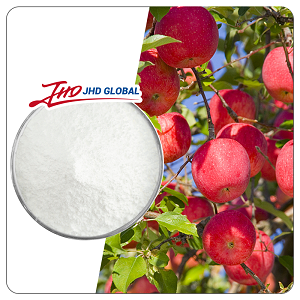
| Appearance | White to slightly yellowish crystalline powder |
| Solubility | Freely soluble in water (300 g/L at 20°C) |
| Melting Point | 190-192°C (with decomposition) |
| Optical Rotation [α]D²⁰ | +20.5° to +21.5° |
| Taste | Slightly acidic, characteristic |
L-ascorbic acid is the biologically active form. The D-isomer (D-ascorbic acid) is chemically identical in formula but biologically inactive — a critical distinction for quality assurance, as the optical rotation specification confirms the presence of the correct L-isomer.
Purity Grades: Food Grade vs. Pharmaceutical Grade (USP/EP/BP)
When sourcing bulk ascorbic acid, you'll encounter different purity grades, each with distinct specifications and applications:
| Grade | Purity | Reference Standard | Typical Applications |
|---|---|---|---|
| Food Grade (FCC) | ≥99.0% | FCC (Food Chemicals Codex) | Functional foods, beverages, general supplements |
| Pharmaceutical Grade (USP) | ≥99.0% | USP (United States Pharmacopeia) | Dietary supplements, pharmaceutical formulations |
| Pharmaceutical Grade (EP/BP) | ≥99.0% | European Pharmacopoeia / British Pharmacopoeia | EU-market supplements, pharmaceuticals |
| Cosmetic Grade | ≥99.0% | Industry specifications | Skincare, topical products |
| Feed Grade | 95-99% | Feed industry standards | Animal nutrition |
Key Insight: While food grade and pharmaceutical grade often share the same ≥99.0% purity headline number, pharmaceutical grade (USP/EP/BP) carries stricter limits on impurities, heavy metals, and residual solvents, and requires testing against the USP Ascorbic Acid monograph. For dietary supplement manufacturing, USP-grade ascorbic acid is the industry standard — it provides the regulatory documentation and quality assurance that brand owners and regulators expect.
Action Item: Always specify "USP grade" (or the equivalent EP/BP grade for EU markets) in your sourcing requirements for dietary supplement applications. Request the full monograph compliance on the COA, not just a purity percentage.
Forms of Vitamin C — Ascorbic Acid vs. Mineral Ascorbates
One of the most important decisions for formulators is which form of Vitamin C to use. Each form has distinct characteristics affecting bioavailability, gastric tolerance, and product positioning.
L-Ascorbic Acid (Plain Vitamin C)
The most common and cost-effective form.
| Aspect | Details |
|---|---|
| Bioavailability | High, but rapid clearance from bloodstream |
| pH / Acidity | Highly acidic (pH ~2.5 in solution) — can cause GI discomfort at high doses |
| Stability | Sensitive to oxidation, heat, light, and metal ions |
| Best for | Standard supplements, effervescent tablets, cost-sensitive formulations |
| Serving Size | Typically 250-1,000 mg |
Sodium Ascorbate
The sodium salt of ascorbic acid — a "buffered" form.
| Aspect | Details |
|---|---|
| Bioavailability | Equivalent to ascorbic acid |
| pH / Acidity | Near-neutral (pH ~7) — gentle on the stomach |
| Stability | More stable than plain ascorbic acid in solution |
| Sodium Content | ~11% sodium (131 mg sodium per 1,000 mg) |
| Best for | Sensitive-stomach formulas, high-dose immune products, beverage applications |
Calcium Ascorbate
The calcium salt of ascorbic acid — combines Vitamin C with calcium.
| Aspect | Details |
|---|---|
| Bioavailability | Equivalent to ascorbic acid |
| pH / Acidity | Near-neutral (pH ~7) — gentle on the stomach |
| Stability | Good stability |
| Calcium Content | ~9% calcium (89 mg calcium per 1,000 mg) |
| Best for | Bone health + immune combination products, sensitive-stomach formulas |
Other Derivatives (Magnesium, Potassium Ascorbate, Ester-C)
| Form | Key Characteristics |
|---|---|
| Magnesium Ascorbate | Combines Vitamin C with magnesium; gentle on stomach; supports muscle/nerve function |
| Potassium Ascorbate | Combines Vitamin C with potassium; used in electrolyte formulas |
| Ester-C® | Branded calcium ascorbate complex with metabolites; marketed for enhanced retention |
| Ascorbyl Palmitate | Fat-soluble Vitamin C ester; used in lipid-based and topical formulations |
| Liposomal Vitamin C | Encapsulated for enhanced cellular delivery; premium positioning |
Formulation Guidance: For standard immune health supplements, plain L-ascorbic acid or sodium ascorbate are the most economical choices. For "gentle" or "high-dose" positioning, mineral ascorbates (sodium or calcium) are preferred. For premium differentiation, liposomal or Ester-C® forms command higher price points.
How Ascorbic Acid Is Manufactured — The Reichstein Process and Modern Fermentation
Understanding the manufacturing process is essential for evaluating supply chain stability, quality consistency, and cost structure.
The Classic Reichstein Process
Developed in 1933 and used commercially for over 70 years, the Reichstein process converts D-glucose into L-ascorbic acid through a multi-step chemical synthesis. Key steps include:
- Hydrogenation of glucose to sorbitol
- Microbial fermentation of sorbitol to sorbose
- Chemical oxidation of sorbose to 2-keto-L-gulonic acid (2-KGA)
- Conversion of 2-KGA to L-ascorbic acid
Characteristics: Well-established, high yield, but involves multiple chemical steps and organic solvents.
Modern Two-Step Fermentation
The 🔗[[two-step fermentation process]], pioneered in China, uses microbial fermentation for the critical conversion steps:
- Step 1: Fermentation of glucose to 2-KGA using Gluconobacter oxydans and Bacillus megaterium (or related strains)
- Step 2: Chemical conversion of 2-KGA to L-ascorbic acid
Characteristics: Reduced chemical processing, fewer solvent requirements, more environmentally friendly, and the dominant method in modern Chinese production — which accounts for the majority of global ascorbic acid supply. Advances in 🔗[[Metabolic Engineering for Vitamin C]] have further optimized microbial strains for higher 2-KGA yields and production efficiency.
Implications for B2B Sourcing
- China dominates global production — over 80% of the world's ascorbic acid is manufactured in China, primarily via the two-step fermentation process
- Supply chain concentration — this concentration means global ascorbic acid prices are sensitive to Chinese production conditions, energy costs, and environmental regulations
- Diversified sourcing recommended — B2B buyers should maintain relationships with suppliers who have stable, verifiable production capacity and safety stock
- Fermentation vs. synthetic positioning — fermentation-derived ascorbic acid supports "natural" positioning claims in some markets, though regulatory treatment varies
Market Applications — Where Vitamin C Fits in Supplement and Functional Product Lines
Immune Health Supplements
Immune support is the dominant application, accounting for the largest share of the Vitamin C supplement market. Products include:
- High-dose immune formulas — 500-1,000 mg per serving, often with zinc and elderberry
- Daily maintenance multivitamins — 60-120 mg per serving as part of comprehensive formulas
- Seasonal immune gummies — palatable formats for family immune support
Functional Foods and Beverages
Ascorbic acid is widely used as both a nutrient fortifier and a functional antioxidant:
- Fortified beverages — juices, sports drinks, vitamin waters
- Effervescent tablets — fast-dissolving Vitamin C supplements
- Functional powders — drink mixes combining Vitamin C with electrolytes or 🔗[[plant extract]] ingredients
Cosmetics and Topical Applications
Ascorbic acid is a leading active ingredient in skincare:
- Vitamin C serums — high-concentration topical formulations (10-20%)
- Anti-aging creams — leveraging Vitamin C's role in collagen synthesis
- Brightening products — targeting hyperpigmentation and uneven skin tone
Sports Nutrition
Emerging application driven by Vitamin C's antioxidant role:
- Recovery formulas — reducing exercise-induced oxidative stress, often combined with amino acids like 🔗[[L-theanine]]
- Joint support — Vitamin C's role in collagen synthesis supports connective tissue health
Quality Specifications — What to Verify When Sourcing Bulk Ascorbic Acid
Complete Quality Parameter Table
When evaluating bulk ascorbic acid, verify these parameters on the COA:
| Parameter | Specification (USP Grade) | Test Method |
|---|---|---|
| Assay (Purity) | 99.0-100.5% | Iodometric titration / HPLC |
| Identification | Positive (A, B, C) | IR, HPLC, chemical tests |
| Specific Rotation [α]D²⁰ | +20.5° to +21.5° | Polarimetry |
| Appearance | White to slightly yellowish crystalline powder | Visual |
| Melting Point | 190-192°C (with decomposition) | Capillary method |
| pH (5% solution) | 2.2-2.5 | pH meter |
| Loss on Drying | ≤0.4% | USP <731> |
| Residue on Ignition (Ash) | ≤0.1% | USP <281> |
| Heavy Metals (as Pb) | ≤10 ppm | ICP-MS |
| Lead (Pb) | ≤2.0 ppm | ICP-MS |
| Arsenic (As) | ≤1.0 ppm | ICP-MS |
| Iron (Fe) | ≤2.0 ppm | AAS / ICP-MS |
| Copper (Cu) | ≤1.0 ppm | AAS / ICP-MS |
| Oxalate | Complies | USP method |
| Residual Solvents | Complies with USP <467> | GC |
| Total Plate Count | ≤1,000 CFU/g | USP <2021> |
| Yeast & Mold | ≤100 CFU/g | USP <2021> |
| E. coli | Negative | USP <2022> |
| Salmonella | Negative | USP <2022> |
| Particle Size | 95% through 40-80 mesh (per spec) | Sieve analysis |
Storage and Stability Considerations
Ascorbic acid is sensitive to environmental factors that accelerate degradation:
- Light: Exposure causes browning and potency loss — store in opaque, light-resistant containers
- Heat: Degradation accelerates above 25°C — store in cool conditions
- Moisture: Hygroscopic; absorbs moisture leading to oxidation — keep in sealed containers
- Metal ions: Iron and copper catalyze oxidation — avoid metal contact
- Oxygen: Oxidation causes discoloration (white → yellow → brown) and potency loss
Shelf Life: When stored properly (cool, dry, sealed, protected from light), USP ascorbic acid typically has a shelf life of 24-36 months from manufacture date. Stability testing should confirm potency remains within specification throughout the claimed shelf life.
Quality Insight: Discoloration (yellowing/browning) is the most visible indicator of ascorbic acid degradation. If your supplier's product shows any yellowing on arrival, it may have been improperly stored or aged — request a fresh batch or investigate storage conditions.
How to Evaluate and Select an Ascorbic Acid Supplier
Supplier Qualification Checklist
☐ Grade Verification — Can provide USP/EP/BP grade (not just food grade) with full monograph compliance ☐ Manufacturing Origin — Transparent about production location and method (fermentation vs. Reichstein synthesis) ☐ Batch-to-Batch Consistency — COAs from last 3-5 batches showing stable purity, rotation, and impurity profiles ☐ Third-Party Testing — Eurofins, SGS, or equivalent independent verification available ☐ Supply Chain Stability — Verifiable production capacity and safety stock to insulate against market fluctuations ☐ Storage & Handling — Proper temperature-controlled storage and moisture-protected packaging ☐ Certifications — cGMP, ISO 9001, ISO 22000, or FSSC 22000; Halal/Kosher if needed ☐ Logistics Capability — US/EU warehousing; DDP/DAP shipping; proper export documentation ☐ Technical Support — Formulation guidance, stability data, solubility information, regulatory documentation ☐ Price Competitiveness — Aligned with market, accounting for grade, volume, and service level
Documentation Requirements
Before finalizing a supplier relationship, request:
- Certificate of Analysis (COA) — Current batch, full USP monograph compliance
- Material Safety Data Sheet (MSDS/SDS)
- Manufacturing Process Description — Fermentation method details and production site
- Stability Data — Real-time and accelerated stability study results
- Certificate of Origin — For customs and trade compliance
- GMO Statement — Non-GMO confirmation (fermentation substrates)
- Allergen Statement — Ascorbic acid is non-allergenic, but verify cross-contamination controls
- Third-Party Laboratory Test Report — Independent verification of purity and heavy metals
- Heavy Metal Testing Report — Full panel (Pb, As, Cd, Hg, Fe, Cu)
- BSE/TSE Statement — For completeness in regulatory documentation
Red Flags to Watch For
- 🚩 Product shows any yellowing/discoloration on arrival (indicates oxidation or aging)
- 🚩 Supplier cannot provide specific rotation data (may indicate D-isomer contamination or non-L form)
- 🚩 COA shows ≥99% purity but no heavy metal or impurity data (incomplete testing)
- 🚩 Unusually low pricing significantly below market (possible non-USP grade mislabeled as USP)
- 🚩 Inability to disclose manufacturing origin or method
- 🚩 No third-party testing capability or unwillingness to accept customer-nominated labs
- 🚩 Inconsistent appearance or particle size across batches
- 🚩 Poor packaging (non-moisture-proof bags) suggesting inadequate storage/handling controls
Frequently Asked Questions (FAQ)
What is the difference between ascorbic acid and vitamin C?
Ascorbic acid IS vitamin C — the terms are used interchangeably. "Vitamin C" is the common name, while "ascorbic acid" (specifically L-ascorbic acid) is the chemical name. However, "vitamin C" can also encompass derivative forms like sodium ascorbate and calcium ascorbate. When sourcing, "ascorbic acid" refers specifically to the plain L-ascorbic acid form (CAS 50-81-7).
What purity grade of ascorbic acid should I use for supplements?
For dietary supplements, USP grade (≥99.0% purity) is the industry standard. For EU markets, EP/BP grade is equivalent. Food grade (FCC) is acceptable for functional foods and beverages but carries less stringent impurity limits. Always specify USP/EP grade for supplement applications and request full monograph compliance documentation.
What is the difference between ascorbic acid and sodium ascorbate?
Both are forms of vitamin C with equivalent bioavailability. The key difference is acidity: ascorbic acid is acidic (pH ~2.5) and may cause stomach discomfort at high doses, while sodium ascorbate is buffered (pH ~7) and gentler on the stomach. Sodium ascorbate also contributes sodium (~11% by weight). Choose based on your product positioning and target consumer's tolerance.
How is ascorbic acid manufactured?
The two dominant methods are the Reichstein process (chemical synthesis from glucose via sorbitol and sorbose) and the two-step fermentation process (microbial fermentation of glucose to 2-keto-L-gulonic acid, then chemical conversion to ascorbic acid). Modern production is dominated by the two-step fermentation process, with over 80% of global supply manufactured in China.
What is the typical MOQ for bulk ascorbic acid?
Typical B2B MOQs range from 25 kg (standard bulk order) to 100 kg+ for large manufacturers. Some suppliers offer 1 kg trial quantities for sample testing and formulation development. Ascorbic acid is typically supplied in 25 kg drums or bags with moisture-proof inner liners.
How should ascorbic acid powder be stored?
Store in tightly sealed, moisture-proof, light-resistant containers at 15-25°C (59-77°F), protected from direct light, heat, and metal contact. Under proper storage, USP ascorbic acid typically maintains potency for 24-36 months. Watch for yellowing/discoloration as a sign of degradation.
Is ascorbic acid suitable for vegan products?
Yes, but verify the manufacturing method. Modern fermentation-derived ascorbic acid is generally vegan-compatible, but some historical production methods used non-vegan processing aids. Request a vegan statement from your supplier and confirm the fermentation substrate and any processing aids used. Also verify capsule shell material if purchasing finished capsules.
Conclusion
Ascorbic acid (Vitamin C) is a foundational ingredient that no supplement manufacturer can ignore — it is the world's most consumed single-nutrient supplement, with a market projected to grow by 🔗[[USD 5.73 billion at a CAGR of 8.4%]] through 2029, and applications spanning immune health, functional beverages, sports nutrition, and cosmetics.
For B2B buyers, successful ascorbic acid sourcing comes down to three critical factors: grade verification (insist on USP/EP pharmaceutical grade), form selection (match the Vitamin C form to your product positioning and target consumer), and supplier transparency (demand full documentation including specific rotation, heavy metals, and third-party testing). The visible yellowing test is your quickest quality check, but comprehensive COA review is your best safeguard.
At JHD CORP / IngredientsSupply, we supply USP-grade ascorbic acid and mineral ascorbates to global supplement manufacturers, with full documentation support, third-party testing, and flexible order quantities to support your formulation and production needs.
Contact us at sales@ingredientssupply.com to request a specification sheet, COA, or product sample for your Vitamin C formulation project.